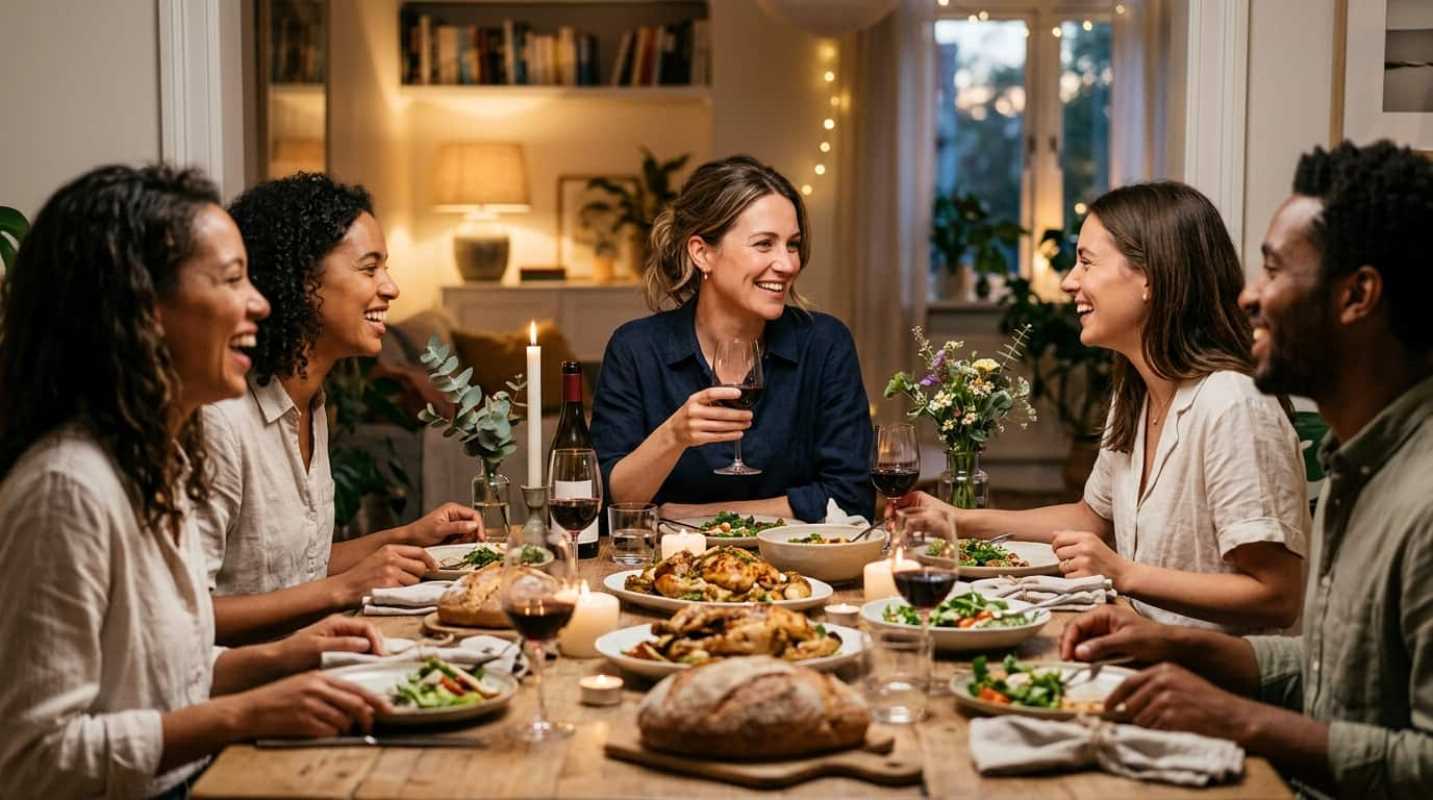
Have you looked at a restaurant bill lately? Between rising menu prices, mandatory service charges, and the sheer noise of a crowded dining room, going out has lost some of its charm. It is no surprise that we are staying home. A recent survey found that 72% of Americans now prefer a night in with friends over a night out.² In fact, home dinner party bookings have jumped 14% as people pull their discretionary spending out of commercial spaces and bring the party back to their own dining tables.¹
We are living in what social analysts call the belonging economy. People are tired of over-engineered, rigid restaurant tasting menus, which recently saw a 38% drop in interest.⁴ Instead, we want a real, unfiltered connection. The American Heart Association found that 84% of adults wish they could share meals with loved ones more often, noting that eating together reminds us to slow down and lower our stress levels.⁷
Yet, the moment we decide to host, panic sets in. We worry about dirty baseboards, complex recipes, and timing everything perfectly. But hosting does not have to feel like a high-stakes performance. You can throw a memorable, beautiful dinner party without losing your mind. Here is how to do it.
Mindset Shift: Why You Don't Need to Be Perfect
Let's get one thing straight. Your guests are not visiting your home to audit your housekeeping or judge your culinary skills. They are there because they want to spend time with you. Striving for meaningful interactions rather than a flawless presentation is what actually alleviates hosting anxiety. This insight comes from Dr. Julianne Holt-Lunstad, a psychology professor who contributed to the U.S. Surgeon General’s report on loneliness.⁷ Your friends care about how they feel in your space, not whether you hand-polished the silver.
This is where the concept of deep casual hosting comes in. Popularized by author Chelsea Fagan, this approach encourages hosts to get over the need to keep score of who hosted last or cook everything from scratch.⁶ Her golden rule is simple: outsource the food, handle the room.
Set realistic expectations for your energy levels. If you had a brutal week at work, do not attempt a five-course French dinner. Embrace the charm of imperfections. A slightly crooked candle, a mismatched set of plates, or a loaf of bread served straight from its paper bag can actually make your home feel more welcoming and lived-in.
Mastering Dinner Party Planning: The Timeline Approach
The secret to a calm host is a structured schedule. When you leave everything to the last minute, you guarantee a frantic scramble right as the doorbell rings. Entertaining expert Jeannie Jacobs recommends spreading the work across a simple timeline to keep your sanity intact.
Instead of doing everything on the day of the party, break your tasks into manageable windows:
• 48 hours out: Finalize your guest list, buy your groceries, and prep any ingredients that can sit in the fridge.
• 24 hours out: Set the table, select your music playlist, and make sure your dishwasher is completely empty.
• 2 hours out: Open the wine, light the candles, and focus only on the final assembly of your food.
Another great approach is to delegate. You do not have to carry the entire evening on your shoulders. Modern hosts are embracing the table captain concept, which means assigning specific roles to helpful friends.¹⁰ When someone asks what they can bring, give them a direct, low-stress task. Ask for a bag of ice, a loaf of sourdough, or a bottle of sparkling water. You can even ask a close friend to arrive fifteen minutes early to act as the drink captain, taking over the job of pouring wine and greeting other guests as they walk through the door.
The Art of the Stress-Free Menu
The easiest way to ruin your own party is to choose a menu that requires active, last-minute cooking. If you are standing over a hot pan searing scallops while your guests sit awkwardly in the next room, you are not hosting. You are working.
To keep things simple, follow the one standout main rule. Keep your guest list to six or eight people, and focus on a single, high-impact main dish accompanied by one starch and one fresh salad.
Your best menu options are dishes that actually taste better when they are made a day or two in advance. Susan MacTavish Best, an experienced host, recommends sticking to reliable, one-pot, or slow-roasted meals.⁷ Think of classics like:
• Beef Bourguignon: A rich stew that develops deeper flavors as it sits in the fridge overnight.
• Coq au Vin: A comforting chicken dish that only requires gentle reheating before serving.
• Slow-roasted pork shoulder: A hands-off main that cooks for hours in the oven, leaving you free all afternoon.
Make strategic shopping your secret weapon. You do not need to make every element from scratch. Buy high-quality store-bought items to fill the gaps. A beautiful artisanal loaf from a local bakery, a pre-made premium cheese board, or a high-end dessert from a pastry shop will save you hours of labor.
Finally, manage dietary restrictions early. Ask about allergies when you send the initial invitation. It is much easier to design a menu that is naturally gluten-free or dairy-free from the beginning than to scramble to cook a separate, emergency meal at the last second.
Creating the Atmosphere Without the Overhaul
You do not need to deep-clean your entire house to host a dinner party. No one is going to inspect your guest bedroom or look inside your laundry closet. Focus your cleaning efforts strictly on high-traffic zones: the entryway, the living room seating area, the guest bathroom, and the kitchen counter. If a surface is not in those areas, ignore it.
Once the basic cleaning is done, let lighting and music do the heavy lifting. This is the dim light, good music rule. Dim the overhead lights completely and rely on lamps, fairy lights, and plenty of unscented candles. Low lighting instantly makes any room feel warm, intimate, and elegant. It also conveniently hides any dust you did not have time to clean.
For your table setting, keep things simple. You do not need elaborate floral centerpieces. In fact, tall flowers block the view across the table and make conversation difficult. Use low bud vases with a few simple stems, or run a green garland down the center of the table. Let the food and the company be the focus.
The Host's Secret Weapon: Being Present
A relaxed host makes for relaxed guests. If you are visibly stressed, your guests will feel uncomfortable and tense. The absolute best thing you can do for your party is to be present in the room.
This is why starting the night with an empty dishwasher is a major expert hack. It means that as plates dirty, you can quickly slide them out of sight instead of letting them pile up on the counter. A clean workspace keeps your mind clear.
If a mishap occurs, handle it with grace. If you burn the bread or drop a dish, do not apologize profusely or let it ruin the mood. Laugh it off. Your guests will take their cues from you. If you treat a mistake as a minor, funny speed bump, they will too. At the end of the night, people will not remember if the food was slightly late or if a glass broke. They will remember the laughter, the ease of the conversation, and the warmth of your home.
To help you transition into an effortless host, we have rounded up some of the best tools and accessories to elevate your next gathering.
Sources:
1. The New Age of Hosting
https://www.dwell.com/article/the-new-age-of-hosting-supper-clubs-dinner-parties-apartment-cafes-2fc55d94-78fce6e6
2. Americans Prefer Nights In
https://missoulian.com/exclusive/article_aa597782-1f94-5873-bbec-a0a8a63f10c1.html
3. 2025 Dining Trends Dinner Parties
https://all4chefs.com/news/2025-dining-trends-dinner-parties/
4. Having People Over by Chelsea Fagan
https://www.penguinrandomhouse.com/books/768806/having-people-over-by-chelsea-fagan/
5. Hosting Party Stress Food Guests
https://apnews.com/article/hosting-party-stress-food-guests-2b5e6b08fda9776a2e27e1f1775439d5