Have you ever looked at a beautifully styled room on social media, packed with lush green plants, and felt a sudden wave of envy? Then you remember your actual life. Between school runs, sports practices, work deadlines, and trying to keep everyone fed, the idea of adding plant care to your daily schedule feels like a joke. You want a home that feels like a peaceful sanctuary, not another chore on your checklist.
Fortunately, you don't have to choose between a beautiful home and your sanity. Indoor plants have become a massive wellness trend, with the global market hitting over 21 billion dollars in 2025.¹ But the real news for busy parents is the shift toward no-drama plants. People are moving away from delicate, high-maintenance tropicals that die if you look at them wrong. Instead, the focus is on resilient greenery that can handle fluctuating temperatures and occasional watering neglect.²
With a few smart choices, you can bring nature indoors without adding any stress to your routine. Let's look at how easy-care plants can fit into your busy life and which ones are tough enough to survive.
Why Busy Families Need Easy Care Greenery
Why even bother bringing plants into a hectic household? It turns out that having some greenery around does a lot more than just fill an empty corner.
First, there is the mental health boost. A landmark systematic review confirmed that interacting with indoor plants significantly lowers cortisol levels, heart rate, and blood pressure.³ It's a simple, passive way to bring a little calm into a chaotic day.
Then there is the soil itself. Potting soil contains a harmless, natural microbe called Mycobacterium vaccae. When your kids get their hands dirty in the soil, inhaling or touching this microbe triggers the release of cytokines, which prompts the brain to produce serotonin. It is a natural mood booster.
Finally, indoor plants can improve your indoor air quality. The Environmental Protection Agency (EPA) estimates that indoor air pollution affects up to 90% of modern homes. Because of this, plants marketed with explicit air-purifying benefits have become highly sought after, commanding a 15% to 25% price premium in retail shops.² Choosing a few tough plants is a cost-effective way to keep your home's air cleaner.
Top Five Unkillable Family-Friendly Indoor Plants
If you want plants that can survive a busy family lifestyle, these five popular options are famous for their resilience.
• Snake Plants: These are the ultimate survivors for low-light corners. They store water in their thick, upright leaves and can easily go a week or two without a drop of water.
• ZZ Plants: If you have a dark hallway or a room with almost no natural light, the ZZ plant is your best friend. It actually prefers to be ignored and thrives on dry soil.
• Pothos: These trailing vines look beautiful cascading down from high shelves. They are highly communicative, meaning their leaves will droop slightly to signal when they are thirsty, then perk right back up after a quick drink.
• Spider Plants: Completely safe for pets and toddlers, these plants produce little baby plantlets on hanging vines.⁴ They are incredibly forgiving and perfect for teaching kids about gardening.
• Rubber Plants: These plants add height and drama to a room with minimal effort. Their glossy leaves only need a wipe-down with a damp cloth occasionally to keep them looking sharp.
Creating a Stress-Free Plant Care Routine
How do you keep these plants alive without turning care into a second job? It all starts with strategic placement.
The team at Monrovia points out that the biggest mistake beginners make is buying a plant based on looks and placing it in a dark corner where it cannot survive.⁵ Map your home's natural light before you buy, and choose plants that match the light you actually have.
Next, ditch the calendar. Watering on a strict schedule, like every Tuesday, is the fastest way to kill a plant through root rot. Instead, use the simple finger test. Just insert your finger an inch or two into the soil. If it feels damp, walk away. If it's dry, it's time to water.
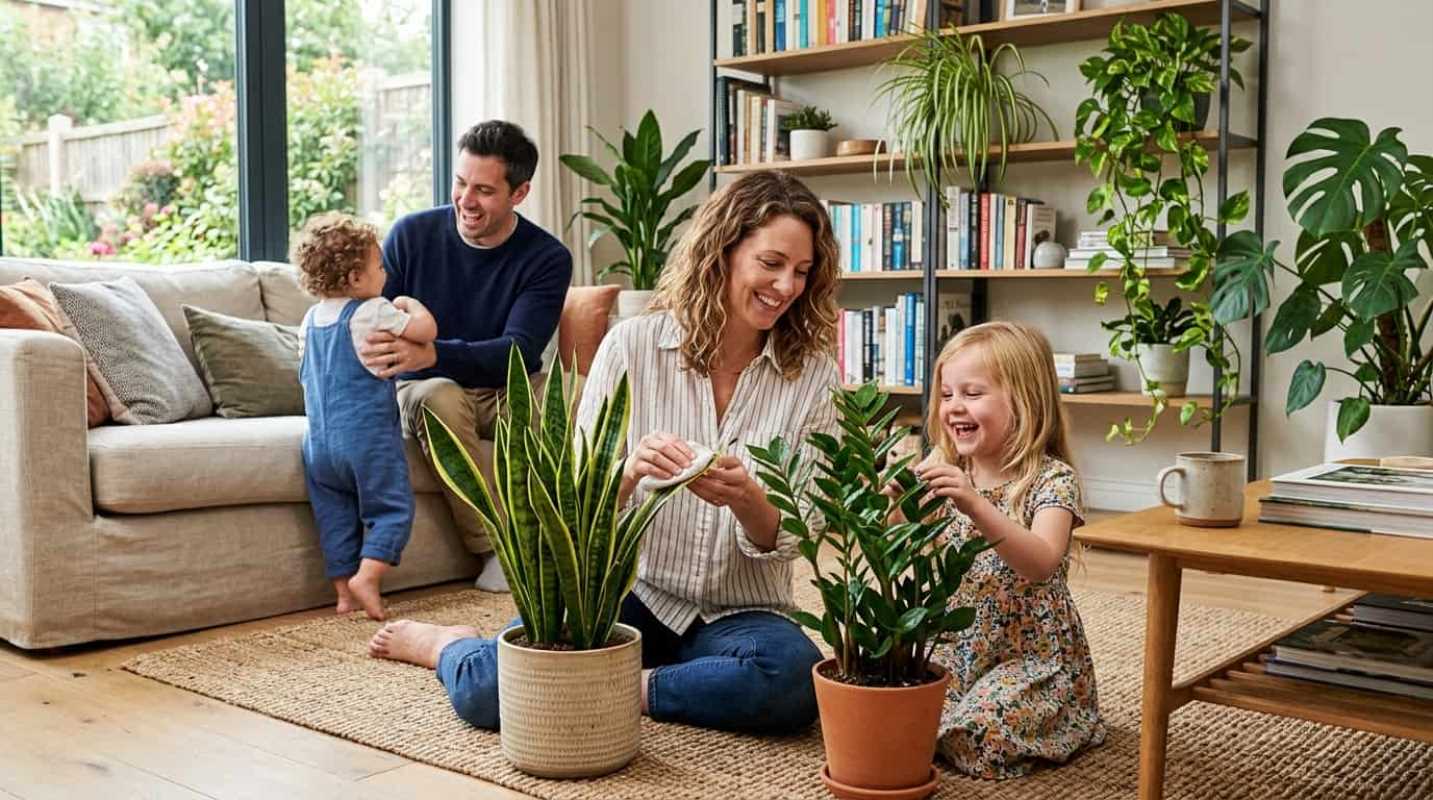
You can also get the kids involved by turning plant care into a weekly screen-free chore. Have them check the soil moisture or use a damp cloth to dust the leaves. It is a tactile, real-world activity that pulls everyone away from their digital devices for a few minutes.
To make things even easier, choose pots with good drainage holes and use high-quality potting soil. For plants that like consistent moisture, self-watering planters are a lifesaver because they slowly release water from the bottom up.
Safety First: Selecting Non-Toxic Options
Although many popular plants are incredibly tough, some of them can be hazardous if you have curious toddlers or pets.
Popular plants like Monstera, Pothos, and Snake Plants contain insoluble calcium oxalate crystals. If chewed, these can cause mouth irritation, swelling, and mild poisoning. You don't have to banish them entirely, but you must keep them out of reach. Put trailing vines on high bookshelves, use wall-mounted planters, or hang them from the ceiling in secure baskets.
If you want complete peace of mind, focus on 100% non-toxic, ASPCA-approved varieties. Plants like the Spider Plant, Parlor Palm, and Baby Rubber Plant (Peperomia) are completely safe if a curious puppy or child takes a bite.⁴
By understanding which plants are safe and placing the riskier ones out of reach, you can build a beautiful green space that is completely safe for every member of your family.
Building a Greener Future
Bringing plants into your busy household does not have to feel like a chore. By choosing the right low-maintenance varieties, you can enjoy cleaner air, lower stress levels, and a beautiful home without sacrificing your precious free time.
Start small. You don't need to turn your living room into a jungle overnight. Pick up just one resilient plant, like a Spider Plant or a Parlor Palm, and see how it fits into your family's daily rhythm.
Before you know it, you'll have a growing, low-stress green space that brings a little bit of the natural world into your everyday life.
Sources:
1. Indoor Plant Market Size, Share, & Trends Report
https://www.custommarketinsights.com/report/indoor-plant-market/
2. The Sill 2025 Plant Trend Report
https://www.thesill.com/blogs/ask-the-sill/the-sill-2025-plant-trend-report-2026-predictions
3. Physiology and Psychology of Indoor Plants
https://pmc.ncbi.nlm.nih.gov/articles/PMC9224521/
4. 15 Non-Toxic Houseplants Safe for Kids & Pets
https://tedsgardens.com/15-non-toxic-houseplants-that-are-safe-for-kids-pets/
5. Green Profit Article on Monrovia Plant Care
https://www.greenprofit.com/Article/?articleid=27494